
Indoor Air Quality Solutions for North Georgia Homes
Home » Indoor Air Quality Solutions for North Georgia Homes

Indoor air problems usually show up as everyday frustrations: dust that settles back on furniture a day after you clean, sticky rooms in July even while the AC runs, dry winter air that brings static shocks, cooking smells that linger until morning, or an upstairs bedroom that stays ten degrees warmer than the main floor. Comfort Medics Heating & Cooling LLC helps North Georgia homeowners fix those issues with whole-home indoor air quality, ventilation, humidity, and zoning equipment matched to the house you already have.
Before we recommend any add-on, we look at your heating and cooling system, filter setup, indoor coil, and ductwork so the fix matches what is actually happening in your rooms.
Schedule a Free In-Home Evaluation Call (470) 360-8887
Start With What You Notice in Your Home
Different indoor air complaints call for different tools. A UV lamp will not trap pet hair, and a thicker filter will not dry out a muggy crawlspace. Jump straight to the issue you want to solve:
Media and electrostatic filters, UV-C lights, PCO systems, and air scrubbers
2. Humidity Control
Whole-home dehumidifiers for sticky summers and humidifiers for dry winters
3. Fresh Air & Venting
Fresh air intakes, bath exhaust fans, dryer vents, range hoods, and power venting
4. Comfort & Zoning
Motorized zone dampers and separate thermostats for uneven floors and rooms
1. Cleaner Air: Filters, UV Lights, PCO Systems, and Air Scrubbers
Every cubic foot of air that your furnace or air handler heats and cools passes through the indoor cabinet and return ducts. Treating air at that central point reaches the whole house instead of one bedroom at a time, as long as each component is matched to your blower and duct capacity.
Upgraded media filters and electrostatic filters
A standard 1-inch filter mainly protects the blower wheel and indoor coil from large lint and dust. Putting a dense, high-MERV 1-inch pleated filter into a narrow return slot can choke airflow, raise static pressure, and contribute to furnace or AC short cycling. When you want finer particle capture for household dust, pollen, and pet dander without starving the equipment for air, we look at two practical upgrades:
Aprilaire deep-pleat media filter cabinets. A wider Aprilaire whole-home media cabinet spreads airflow across much more filter surface area than a 1-inch slot, capturing smaller airborne particles while keeping static pressure low. See Aprilaire’s homeowner guide to whole-home air purifiers. We also install the Honeywell Home F100 media air cleaner, and you can read how we measure duct resistance on our airflow and ductwork standard section.
Electrostatic filters. Electrostatic air filters use a static charge generated by airflow (or a low-voltage polarized media design) to attract fine dust and dander to the collector fibers. Washable electrostatic models need regular rinsing and complete drying to keep airflow open, and we show you the exact cleaning schedule if you choose one.
If your home works well on standard 1-inch filtration, our Comfort Club maintenance plan includes fresh 1-inch filters at both seasonal tune-ups along with indoor coil and drain cleaning.
Germicidal UV-C coil lights (Blue-Tube UV)
During a long North Georgia cooling season, the indoor evaporator coil and drain pan stay cold and wet for months. Dark, damp metal fins can grow mold and biofilm that restrict heat transfer and send a musty smell through the supply vents when the blower starts.
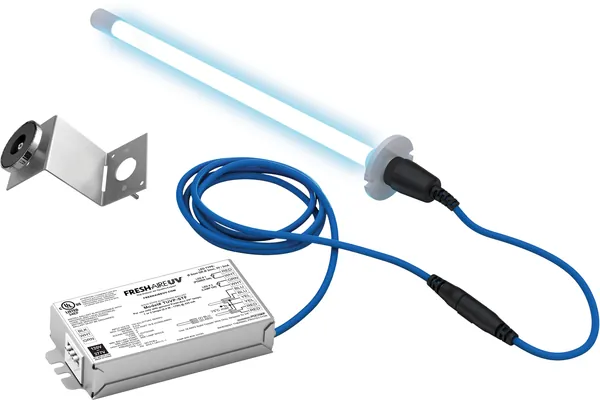
We install Blue-Tube UV (often written BlueTube), a residential 254-nanometer UV-C germicidal lamp made by Fresh-Aire UV that mounts inside the air handler or coil cabinet. Shining continuous UV-C light directly onto the damp coil and drain pan helps inhibit mold and microbial buildup on those interior surfaces. Keep in mind what a coil UV lamp does not do: light cannot catch dust, pollen, or pet hair, so a UV-C lamp always works alongside a proper air filter rather than replacing one. See Fresh-Aire UV’s Blue-Tube UV homeowner page for manufacturer details.
PCO systems and whole-home air scrubbers (APCO and REME HALO Zero)
Filters trap solid particles, and coil lamps shine on wet metal surfaces, but neither one does much for lingering cooking smells, pet odors, or volatile organic compounds (VOCs) from paint, cleaners, and new flooring. For odor and whole-duct air treatment, we install photocatalytic oxidation (PCO) units and active in-duct air scrubbers:
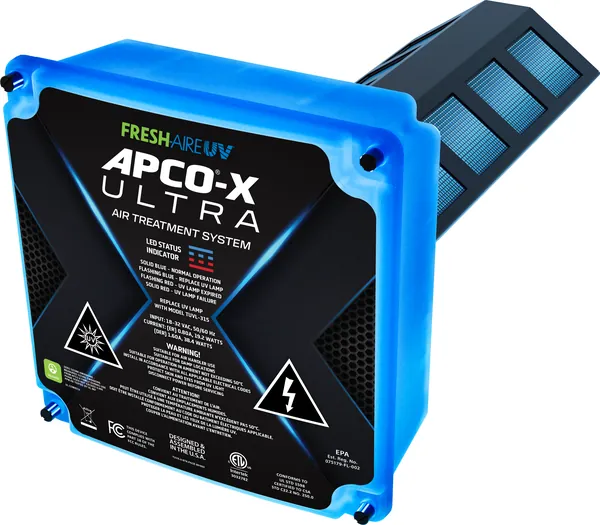
APCO (Fresh-Aire UV). APCO combines a 254 nm UV-C lamp with an activated-carbon catalyst cell mounted inside your central air system. Carbon cells capture odor-causing gas molecules and VOCs as air passes through, and the UV-C catalyst reaction breaks them down inside the chamber without dispersing oxidizers into your rooms. See Fresh-Aire UV’s APCO-X ULTRA homeowner page for current product details.
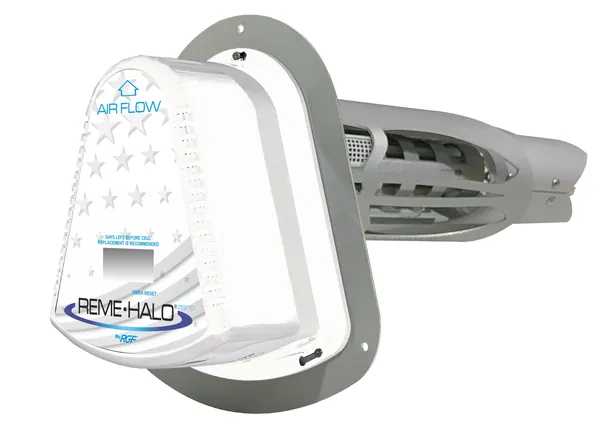
REME HALO Zero and HALO LED (RGF Environmental). We install RGF’s UL 2998 zero-ozone validated in-duct air scrubbers: REME HALO Zero and HALO LED. According to the manufacturer, these units use UV light and a catalyst target to produce low-level airborne hydroperoxides along with charged ions that help fine dust particles stick together so your HVAC filter catches more of them, while helping reduce household odors. See RGF’s REME HALO Zero homeowner product page for manufacturer details.
For homes dealing with heavy indoor smoke or stubborn recurring odors, we can also discuss dedicated whole-home smoke-eater filtration options during your evaluation.
An honest note on health claims and ozone
We keep expectations realistic. Whole-home filters, UV-C lights, PCO units, and air scrubbers help keep HVAC coils cleaner, capture more household dust and dander, and cut down on odors, but no HVAC accessory treats allergies or asthma, replaces medical care, or prevents viral illness.
You should also ask about ozone before buying any electronic air cleaner, ionizer, or PCO unit. Some older or unverified designs generate ozone as a byproduct, and the U.S. EPA notes that ozone in indoor air can irritate lungs and airways. Independent standard UL 2998 verifies zero-ozone emissions (0.005 parts per million or less). Fresh-Aire UV states that its APCO line is UL 2998 zero-ozone validated, and the REME HALO Zero and HALO LED models we install are UL 2998 zero-ozone validated per RGF. Whenever we quote an air scrubber or PCO unit, we review the exact model and its ozone rating with you up front.
2. Humidity Control: Whole-Home Dehumidifiers and Humidifiers
Temperature is only half of indoor comfort. Most homes feel comfortable when indoor relative humidity stays roughly between 35% and 50%. In North Georgia, outdoor weather pushes indoor air past both ends of that range over the course of a year.
Whole-home dehumidifiers for muggy summers (Aprilaire and Honeywell)
Your air conditioner removes moisture only while the compressor is actively cooling. On rainy spring days, mild fall afternoons, or shady summer mornings, the house may not get warm enough to keep the AC running long cycles, so indoor humidity climbs past 55% or 60%. Rooms feel cool and clammy at the same time, wood floors cup, and closets or basements smell musty. Our guide to high humidity in the house walks through the common causes.
Aprilaire whole-home dehumidifiers. Comfort Medics is an authorized Aprilaire dealer, and we install ducted Aprilaire whole-home dehumidifiers that pull damp air from the return system (or a dedicated basement or crawlspace zone), wring out excess water independent of your AC thermostat temperature, and drain automatically through a condensate line so you never have to haul heavy water buckets upstairs like you do with portable room units. See Aprilaire’s homeowner guide to whole-home dehumidifiers.
We also install Honeywell Home whole-home dehumidifiers. If your AC used to dry the house well and suddenly stopped keeping up, we check your cooling equipment first through our cooling repair and diagnostic services.
Whole-home humidifiers for dry winter air (Aprilaire and Honeywell)
When cold weather arrives in December, January, and February, gas furnaces and heat pumps warm cold winter air that holds very little moisture. Indoor humidity can drop into the 20s, bringing static shocks on doorknobs, dry nasal passages, and seasonal gaps in hardwood flooring and trim.
Aprilaire whole-home humidifiers. Whole-home bypass, fan-powered, and steam humidifiers from Aprilaire mount right on your central heating ductwork and tie into a plumbing supply line. Controlled by a digital humidistat, the humidifier adds measured moisture only when your heating system calls for it and shuts off automatically before windows sweat. See Aprilaire’s homeowner humidifier overview.
We also install Honeywell Home whole-home evaporative humidifiers. Visit our heating services page if your furnace or heat pump also needs winter service.
Dealing with clammy summer rooms, musty odors, or dusty vents? We inspect your system in person and explain what will actually help.
3. Fresh Air and Venting: Bringing Clean Air In and Moving Moisture Out
Filtration and UV treatment work on air that stays inside the house, while ventilation handles air exchange with the outdoors. Tighter windows, spray foam, and weatherstripping lower utility bills, yet they also trap cooking smoke, shower steam, and everyday household odors unless stale air has a dedicated path outside and fresh air has a controlled way in.
Fresh air and whole-home ventilation systems
Opening windows in July lets in heavy Georgia humidity and pollen, and opening them in January wastes heat. Controlled mechanical ventilation, including motorized fresh-air intake dampers and balanced energy-recovery ventilation (ERV) options from brands such as Aprilaire and Honeywell, brings measured outdoor air through filtration on a set schedule so tightly sealed homes do not feel stuffy.
Bath exhaust fans, dryer vents, and range hood venting
Spot exhaust stops moisture, lint, and grease right at the source before your central HVAC system has to fight them. During inspections we frequently find exhaust ducts detached in attics or terminating into soffits where damp air gets pulled straight back into the roof framing. We install and correct residential exhaust runs so air exits cleanly outdoors, including dryer vent cleaning when lint buildup is restricting airflow:
- Bath fans. Properly sized bathroom exhaust fans vented through insulated ducting to a dedicated exterior wall or roof cap, keeping shower moisture out of your bathroom ceiling and attic insulation.
- Dryer vents. Rigid metal dryer vent ducting routed outdoors with minimal bends and proper termination hoods (never plastic foil accordion hose) to move heat, wet air, and lint safely out of the laundry room. We also clean existing dryer vents when lint has built up and slowed the dryer or created a fire risk.
- Range hood venting. Ducted kitchen range hood exhaust to vent cooking smoke, steam, grease vapor, and gas stove combustion byproducts outside instead of blowing them back over your cabinets through a recirculating screen.
Power ventilation
Where enclosed spaces trap excessive heat or dampness, we install and service residential power ventilation equipment. Because a strong attic fan can pull cooled indoor air up through ceiling light fixtures or backdraft natural-draft gas water heaters and furnaces if attic intake vents or ceiling air sealing are short, we inspect intake net free area and combustion venting before recommending powered ventilation.
4. Comfort Control: Multi-Zone HVAC Damper Systems
In many two-story North Georgia homes, split-levels, and houses with bonus rooms over the garage, a single hallway thermostat downstairs shuts the system off long before the upstairs bedrooms cool down. If that sounds familiar, read our troubleshooting guide on why an upstairs stays hotter than downstairs to see all the common causes.
Motorized zone dampers and controls (EWC, DuroZone, and Honeywell)
When one HVAC system serves floors or wings with very different sun exposure and heat loads, a zoning system divides the ductwork into independent comfort zones. Each zone gets its own thermostat wired to a central zone control panel, which opens and closes motorized dampers inside your supply trunks so heated or cooled air goes to the floor calling for it.
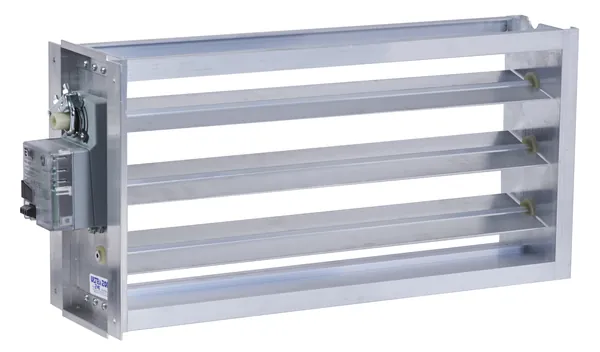
We install new residential zoning systems and repair or replace failed zone boards and stuck actuators using EWC, DuroZone, and Honeywell equipment. See EWC’s Ultra-Zone homeowner overview, DuroDyne’s DuroZone zoning information, and the Honeywell Home TrueZONE zoning panel page.
Why airflow and static pressure come first in zoning
Closing half of a home’s dampers while a single-stage blower pushes full airflow into the remaining ducts can spike static pressure, make supply grilles whistle, overheat a furnace heat exchanger, or freeze an indoor cooling coil. Before we quote a new zone system, we measure external static pressure, inspect trunk and branch sizing, check whether your equipment is single-stage or variable-speed, and design proper pressure relief or staging. Those are the same measurement standards we follow on every Comfort Medics HVAC installation. For the warning signs of an overworked duct system, see high static pressure and ductwork problems.
How We Decide What Your Home Actually Needs
You do not need every product on this page, and sometimes an indoor air problem does not require new accessories at all. A clammy living room can come from a thermostat fan left on On instead of Auto, and a dusty bedroom can come from a disconnected return duct in the crawlspace. Our in-home evaluation follows four straightforward steps:
- Listen to what you notice day to day. We ask which rooms bother you, what time of year the issue happens, and whether you are dealing with dust, odors, dampness, dry winter air, exhaust issues, or uneven temperatures.
- Check the HVAC fundamentals first. We inspect your current filter slot, indoor coil and condensate drain, blower settings, return and supply duct connections, external static pressure, and existing bath, dryer, or kitchen exhaust terminations. If a duct repair, thermostat setting, or routine coil cleaning will solve the problem without buying an IAQ add-on, we tell you plainly.
- Verify fit, power, and airflow capacity. Media cabinets need physical clearance at the return drop, whole-home humidifiers and dehumidifiers need water supply or drain routing, and zone dampers need ducts sized to handle zoned airflow. We confirm every mechanical detail before quoting.
- Give you a clear written quote with zero pressure. All systems start at typical fair market value, and your exact quote reflects your home’s ductwork, access, and the equipment you pick after our in-home evaluation. If you prefer monthly payments, financing is available through FTL Finance and other lenders (subject to credit approval).
Already have a UV light, humidifier, dehumidifier, or zoning system that stopped working? We diagnose and repair existing residential IAQ and zoning gear too. Standard repair visits carry a diagnostic service fee that is credited toward the repair if you go ahead, and Comfort Club members never pay service fees.
Brands We Install and North Georgia Towns We Serve
For residential indoor air quality, humidity control, ventilation, and comfort zoning, we install REME HALO Zero and HALO LED, Aprilaire, Honeywell, EWC, DuroZone, Blue-Tube UV (BlueTube), APCO, and electrostatic filters. If your central heating and air system itself is worn out or improperly sized, we can also evaluate full HVAC replacement and installation during the same visit.
From our home base in Kingston, GA, Comfort Medics serves homeowners across Kingston, Rome, Cartersville, Calhoun, Adairsville, Woodstock, Canton, Marietta, Acworth, Kennesaw, Dallas, Milton, Roswell, Jasper, Ball Ground, Ellijay, and Dalton. View our full coverage map on the service areas page.
Why Homeowners Trust Comfort Medics
Comfort Medics is a family-owned residential HVAC company based in Kingston, GA. Our owner has 17 years of hands-on HVAC experience and still stays close to the work in the field. We are licensed and insured (GA. REG. CR2011437), EPA 608 Type II certified, and we pull the permits your job needs. Evaluations are free of pressure: we explain what will actually help your house, quote the work clearly, and leave the decision with you. Financing is available when you want to spread payments out, and we are here 24/7 for HVAC emergencies across North Georgia.
Indoor Air Quality Questions From Homeowners
Will buying the highest-MERV 1-inch filter at the hardware store clean my air better?
Usually it creates an airflow problem instead. A dense 1-inch filter packs tight pleats into a narrow slot, which raises static pressure, reduces airflow to far bedrooms, and makes your blower motor work harder. If you want high-efficiency particle filtration, upgrading to a deeper Aprilaire or Honeywell media filter cabinet or a properly matched electrostatic filter gives the air enough surface area to pass through cleanly.
What is the difference between Blue-Tube UV, APCO, and REME HALO Zero?
Blue-Tube UV (by Fresh-Aire UV) is a 254 nm germicidal UV-C light aimed at your damp indoor cooling coil and drain pan to inhibit mold and microbial buildup on interior metal surfaces. APCO (also by Fresh-Aire UV) pairs a UV-C lamp with an activated-carbon catalyst cell inside the duct system to capture and break down household odors and VOCs without releasing oxidizers into your rooms. REME HALO Zero and HALO LED (by RGF) are the UL 2998 zero-ozone validated in-duct air scrubbers we install. According to the manufacturer, they use hydroperoxides and ionized particles in the supply air to tackle household odors and help fine dust clump together so your filter catches more of it.
Do whole-home air scrubbers or PCO systems make ozone?
Some older PCO designs and electronic air cleaners can produce ozone as a byproduct, which the U.S. EPA warns can irritate lungs and worsen breathing discomfort. Look for independent UL 2998 zero-ozone validation. Fresh-Aire UV states its APCO product line is UL 2998 validated for zero ozone. The REME HALO Zero and HALO LED models we install are UL 2998 zero-ozone validated per RGF. We always go over the exact model and its ozone certification before you decide.
Why does my house feel clammy in summer even when the thermostat hits 72 degrees?
Air conditioners only wring moisture out of the air during steady cooling runs. If your AC is oversized and shuts off after five minutes, if the thermostat fan is set to On instead of Auto (blowing moisture off the wet coil back into the rooms between cycles), if return ducts leak in a damp crawlspace or attic, or if mild rainy weather keeps the AC from running much, humidity stays high even at 72 degrees. We check those HVAC causes first and recommend a whole-home Aprilaire or Honeywell dehumidifier when your house needs dedicated moisture control.
Can you add HVAC zoning dampers to my existing ductwork?
In many homes, yes, once we inspect your duct layout and equipment. Adding EWC, DuroZone, or Honeywell motorized dampers works well when trunks can be separated cleanly by floor or wing and static pressure is managed properly. During our evaluation, we measure airflow and static pressure so closing one zone’s dampers will not strain your blower or freeze your evaporator coil.
How much does indoor air quality equipment cost installed?
All systems start at typical fair market value. Because installing a UV coil lamp takes very different sheet-metal, drain, or electrical work than installing a ducted whole-home dehumidifier, range hood exhaust run, or multi-zone damper panel, we quote an exact price after checking your home in person. Quotes for new IAQ installations are free, and financing is available through FTL Finance and other lenders (subject to credit approval).
Schedule Your Free Indoor Air Quality Evaluation
Tell us what is going on with the air, humidity, venting, or room temperatures in your home. We will walk through the options that fit your house and leave the decision with you.


